
https://textiles.ncsu.edu/people/bpourdey/
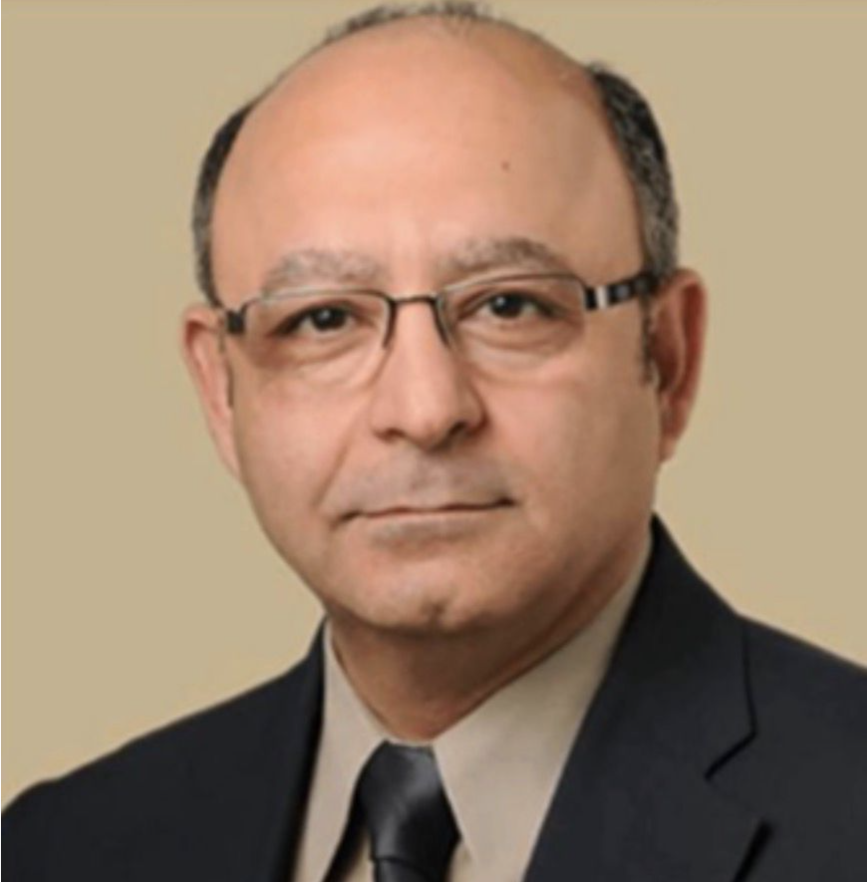
Prof. Behnam Pourdeyhimi
Behnam is the William A. Klopman Distinguished Professor of Materials in the Wilson College of Textiles at NC State University and is also an adjunct professor in the departments of Chemical and Biomolecular Engineering and Biomedical Engineering. He also serves as Associate Dean in the Wilson College of Textiles and is the Executive Director of The Nonwovens Institute.
https://avesis.erciyes.edu.tr/iozen
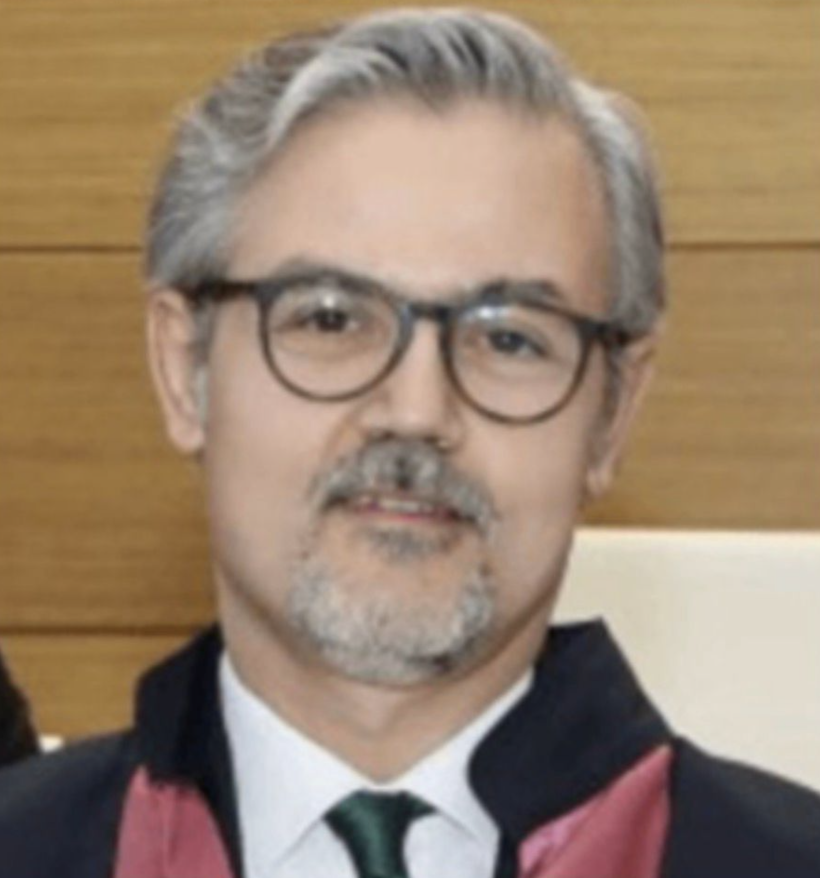
Prof. İLHAN ÖZEN
Kayseri Erciyes University. Department of Textile Engineering
KEYNOTE SPEECH: "Combination Eermulations with Nangemulsions and Nanofibres at the Intersection of Topical and Transdermal Therapx".
One of the highly esteemed academic staff members in Erciyes University is Professor Dr. İlhan Özen who is attached to the Department of Textile Engineering of the Faculty of Engineering. The research interests of Professor Özen include polymer technology, nanotechnology, and textile chemistry and specifically mechanics of materials and chemical technologies. In addition, he is an internationally renowned scholar who earned his doctoral degree from the University of Stuttgart and has carried out collaborative research with institutes like the Institute for Frontier Materials, Deakin University in Australia. In this regard, his published work includes a very high h-index, more than 680 citations, and contributions to reputed journals such as Journal of Cleaner Production and Small Structures. He currently investigates topics related to the functionalization of carbon nanotube surfaces, environmental dyeing technologies, and biomedical applications of nanofibers.
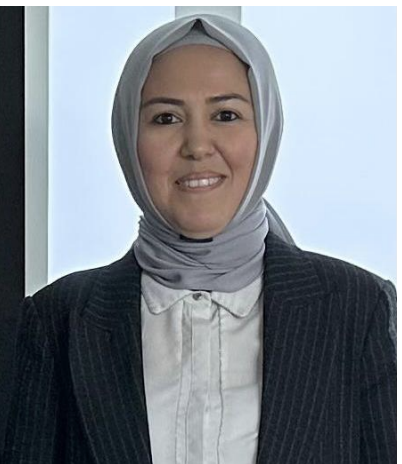
Dr. Zehra Yildiz
https://avesis.marmara.edu.tr/zehra.yildiz
Dr. Zehra Yildiz is associated professor in Marmara University, Department of Textile Engineering, Turkey. She got a Ph.D. in Polymer Science and Technology from Istanbul Technical University, Turkey, in 2017. Her research areas are as follows; sustainable textile products/manufacturing, recycle/reuse of textile wastes, UV-curable environmentally friendly coatings, functional coatings, conductive polymeric materials, adhesives, rubber/textile composites, natural fiber reinforced composites. Keynote Speech: “From Textile Waste Powders to Bio-Based 3D Printing: Cross-Sector Applications and UV-Curable Polymer Innovations”
https://sciprofiles.com/profile/1426055
Prof. Peter Krajnc
Prof. Peter Krajnc is head of research program group of Chemistry of Surfaces and Nanoparticle and Vice Dean for international affairs at the University of Maribor.
Prof. Peter Krajnc received his PhD in Chemistry and Chemical Technology in 1999, under Prof. M. Zupan at the University of Ljubljana. He studied as a post-doctoral research assistant with Prof. N. R. Cameron under a European Community Marie Curie Fellowship Scheme at University of Durham, United Kingdom, in 2001-2002. His primary research interest is focused on porous polymers - synthesis and applications, polymer supported synthesis and catalysis, polymers for biomedical and environmental applications; tissue engineering, biomimetic functions, synthetic polymers, polymers for water and air treatment.
Prof. M.Özgür Seydibeyoğlu1,2*
1İzmir Katip Çelebi University, Department of Metallurgical and Materials Engineering, İzmir, Türkiye
2Circular, Sustainable, and Functional Materials Laboratory, İzmir, Türkiye
seydibey@gmail.com, +90-5325475217
POLYMERIC COMPOSITES PROCESSING WITH ADDITIVE MANUFACTURING VIA CIRCULAR ECONOMY PERSPECTIVE
Due to increasing environmental problems and the inability to dispose of polymers and fibers through effective recycling process, class of plastics (including plastics + textile fibers) has a bad reputation among the people in the community. However, proper separation and processing of these materials is of great importance. Circular Economy approach with upcycling activities play crucial role in the effective utilization of polymers, fibers, and other additives. In addition to twin screw extruder and compounding, additive manufacturing offers numerous advantages for the polymers in terms of waste utilization, waste upcycling, fast processing, and cost-effective solutions. Our group working on circular materials will present our efforts on the effective utilization of various natural fibers, biopolymers, and biocomposites. Processing of the biocomposites and recycling of polymers in terms of additive manufacturing will be presented. Furthermore, recent works on Life Cycle Assessment, Carbon Foot Print Analysis with SimaPro software will be explained for a sustainable world.
Dr. Turdimuhammad Abdullah
The Department of Metallurgical & Materials Engineering, Kocaeli University, Izmit, Kocaeli, Turkey
turdi.abdullah@kocaeli.edu.tr, +905434944907
Keynote Speech: Bio-Based Long Chain n-Alkyl (Meth)Acrylates: Versatile Wonder Materials for Advanced Applications
Biography: Dr. Turdimuhammad Abdullah obtained his PhD in Chemical Engineering in 2019 and has since built a multidisciplinary career bridging academia and industry. He completed two postdoctoral appointments, including being awarded a Marie Skłodowska-Curie Actions (MSCA) Individual Fellowship. His research focuses on biomaterials, polymer technology, nanotechnology, and photo-curable resins. He later transitioned into industry, where he has contributed to resin formulation and polymer technology, particularly in coating systems and high-performance materials. Dr. Abdullah has published more than 30 scientific articles and holds 8 granted patents, reflecting his strong contribution to both fundamental research and applied industrial innovation in polymer science.
 Dr. Ömer Yunus Gümüş
Keynote Speech: Additive Manufacturing of Challenging Polymeric Materials: Recent Advances in 3D Printing of Elastomers, Rubbers, and Continuous Fiber-Reinforced Polymer Composites.
Dr. Ömer Yunus Gümüş is an Associate Professor in the Department of Polymer Materials Engineering at Bursa Technical University. He completed his undergraduate and graduate studies in the Chemistry Department at Gazi Üniversitesi, where his thesis work focused on polymer synthesis and smart material applications.
His research interests include polymer composites and blends, functional polymers, smart materials, polymer additives, 3D printing technologies, and advanced material design.

Dr. Melike Güngör
Keynote Speech: Design of Asymmetrically Structured Fibrous Media from Sustainable Sources for Oily Aerosol Filtration
Industrial processes frequently generate submicron oily droplets that jeopardize occupational health and equipment durability, necessitating the development of cost-effective and sustainable filtration solutions. Although fibrous filters are preferred for their high surface area and efficiency in capturing these aerosols, they often face operational challenges such as rapid clogging and high pressure drops. An eco-friendly and asymmetrically structured design not only optimizes the removal of oily droplets but also significantly enhances overall industrial air filtration performance.

Prof. Dr. Nalan Oya SAN
Electrospinning-Based Functional Materials for Bio, Environmental and Surface Applications
Prof. Dr. Nalan Oya San is the Director of NanoSaN Laboratory at Ankara Hacı Bayram Veli University, Türkiye. Her work centers on nanobiotechnology, electrospun nanofibers, and functional coating technologies, with a particular interest in sustainable materials for environmental and biomedical applications.

Dr. Irem Unalan
Friedrich-Alexander-Universität Erlangen–Nürnberg- Institute of Biomaterials
Melt Electrowriting for BioinstructiveScaffolds: From Micro-Architecture to Biological Function
Dr. Irem Unalan studied Biomedical Engineering at Near East University and obtained her M.Sc. in Biomedical Technologies from Dokuz Eylul University. She joined the Institute of Biomaterials at Friedrich-Alexander-Universität Erlangen–Nürnberg (FAU) in 2016 and completed her PhD in 2022 with distinction, receiving the Best PhD Dissertation Award from the German Society for Biomaterials (DGBM). She is currently a postdoctoral researcher and habilitation candidate at FAU. Her research focuses on bio-inspired hierarchical melt electrowritten (MEW) scaffolds for regenerative medicine, with particular emphasis on wound healing, bone regeneration, and fatigue-resistant biomaterials. She has received competitive funding, including the FAU Emerging Talents Initiative and the Emerging Brain Initiative. She integrates advanced additive manufacturing techniques, including melt electrowriting, electrospinning, and extrusion-based bioprinting, with organic–inorganic composite design and biological evaluation to develop translational biomaterials systems with controlled architecture and biofunctionality.
Melt electrowriting (MEW) is an emerging fiber-based additive manufacturing technique that combines electrohydrodynamic processing with precise control, enabling the fabrication of highly ordered microfibrous architectures 1,2. Due to its ability to produce well-defined fiber diameters and reproducible pore geometries, MEW has attracted increasing attention for applications ranging from functional materials to biomedical scaffolds2,3. In this work, we study the relation between process parameters, fiber architecture, and functional performance. By studying key processing variables, we identified stable conditions and produced uniform, bead-free polycaprolactone (PCL) microfibers with controlled geometry and high structural quality. Using these conditions, scaffolds with defined anisotropic laydown patterns (0/90°, 0/60°, 0/45°, and 0/30°) were fabricated. The results show that fiber orientation directly affects mechanical behavior, including stiffness, elongation, and deformation. To improve functionality, MEW scaffolds were modified by combining organic and inorganic components. Surface functionalization combined with gelatin coatings and incorporation of mesoporous bioactive glass nanoparticles (MBGNs) 4,5 enabled the development of multifunctional fibrous systems with enhanced surface properties and biological performance. In addition, incorporation of bioactive agents such as essential oils 6 introduced antioxidantand antibacterial activity while maintaining cytocompatibility . Apart from functionalization, we also explore bioinspired approaches to improve mechanical durability. Inspired by anisotropic biological structures such as fish bone, MEW scaffolds with tailored architectures exhibit high flexibility and damage tolerance. Preliminary mechanical characterization showed elastic moduli of around ~1 GPa. The results also showed strong architecture-dependent mechanical behavior, highlighting the potential of MEW for fatigue-resistant materials. Overall, this work shows that MEW is a versatile platform to design fiber-based structures with controllable mechanical and biological properties. By linking fiber processing, structure, and performance, this approach opens new possibilities for advanced polymer materials in biomedical and engineering applications.

Dr. Obaid Alqahtani
Obaid Alqahtani is an assistant professor of materials science in the Department of Physics at the College of Science and Humanities, Prince Sattam bin Abdulaziz University (PSAU) in Alkharj, Saudi Arabia. He also serves as the supervisor of the University Central Laboratory (UCL) at PSAU. His research focuses on polymers and semiconducting organic materials for sustainability and energy applications.
He earned his M.S. and Ph.D. from Washington State University and has conducted research at leading international facilities, including Lawrence Berkeley National Laboratory. He is a patent holder and has received international recognition for his innovative contributions to advanced materials research.
In this talk, he will discuss how the UCL supports research and innovation at PSAU and highlight potential opportunities for collaboration in alignment with national healthcare and industrial strategies. The presentation will also explore emerging areas such as smart medical textiles and nanofibers, and their role in advancing healthcare innovation.

Assoc. Prof. Dr. Alper KAŞGÖZ
The author’s research has primarily focused on establishing structure–property–processing relationships in polymer systems, with particular emphasis on rheology-driven microstructure development and its impact on mechanical, electrical, and dielectric performance. His work covers polymer blends and filled systems, including carbon-based and mineral-reinforced composites, where filler dispersion, interfacial interactions, and percolation behavior are directly linked to viscoelastic response and end-use properties. In addition to conventional composite design, recent work has explored lightweight and functional polymer structures through controlled morphology development, highlighting the critical role of processing conditions in tailoring performance.
Speech title:
An Alternative Approach to Fiber-Reinforced Composites: Self-Reinforced Polymer Systems for Lightweight Applications
Fiber-reinforced composites have long been the dominant strategy for achieving high mechanical performance in lightweight applications. However, their widespread use is increasingly challenged by issues related to recyclability, interfacial incompatibility, and process complexity. In this context, self-reinforced polymer (SRP) systems offer an alternative approach, providing a different balance between mechanical performance, processability, and sustainability. Unlike conventional composites, SRP systems rely on the formation of reinforcing structures within the same polymer family, which minimizes interfacial mismatch and improves structural integrity. Although the reinforcement efficiency of these systems is generally lower than that of glass or carbon fiber-based composites, they present advantages in terms of recyclability, reduced density, and compatibility with thermoplastic processing methods. At the same time, their performance is closely linked to processing conditions, since the development of oriented or fibrillar morphologies depends on deformation history and subsequent stabilization. This keynote presents a general perspective on self-reinforced polymer systems with a focus on processing-induced structure formation. Emphasis is placed on the relationship between processing conditions and resulting morphology, and how this relationship influences the mechanical response of lightweight polymer systems. The aim is to provide a balanced view of the opportunities and limitations of SRP approaches and to discuss their potential role in future material design strategies.

ÖZKAN SUR
KEYNOTE SPEECH TITLE: The Future of the Composite Industry and the University, Graduate, Industry Triangle
KEYNOTE SPEAKER RESUME: Özkan graduated from ITU Aeronautical Engineering. He started his career as a Design and Application Engineer.
He worked as a Continuous Improvement Engineer at NURSAN ELEKTRİK, Production Manager at KURTMAN, and Deputy General Manager at GSB OILLESS İMALAT SAN. He served as the Director of Technical Units responsible for Production, Quality, Planning, R&D, and Occupational Health and Safety at Polin Water Parks. He is currently the General Manager of OTOSTECH, a company operating in the Composite and Marine sectors.